Joanne Marracci Crafts Color, Sparkle & Spreadsheets
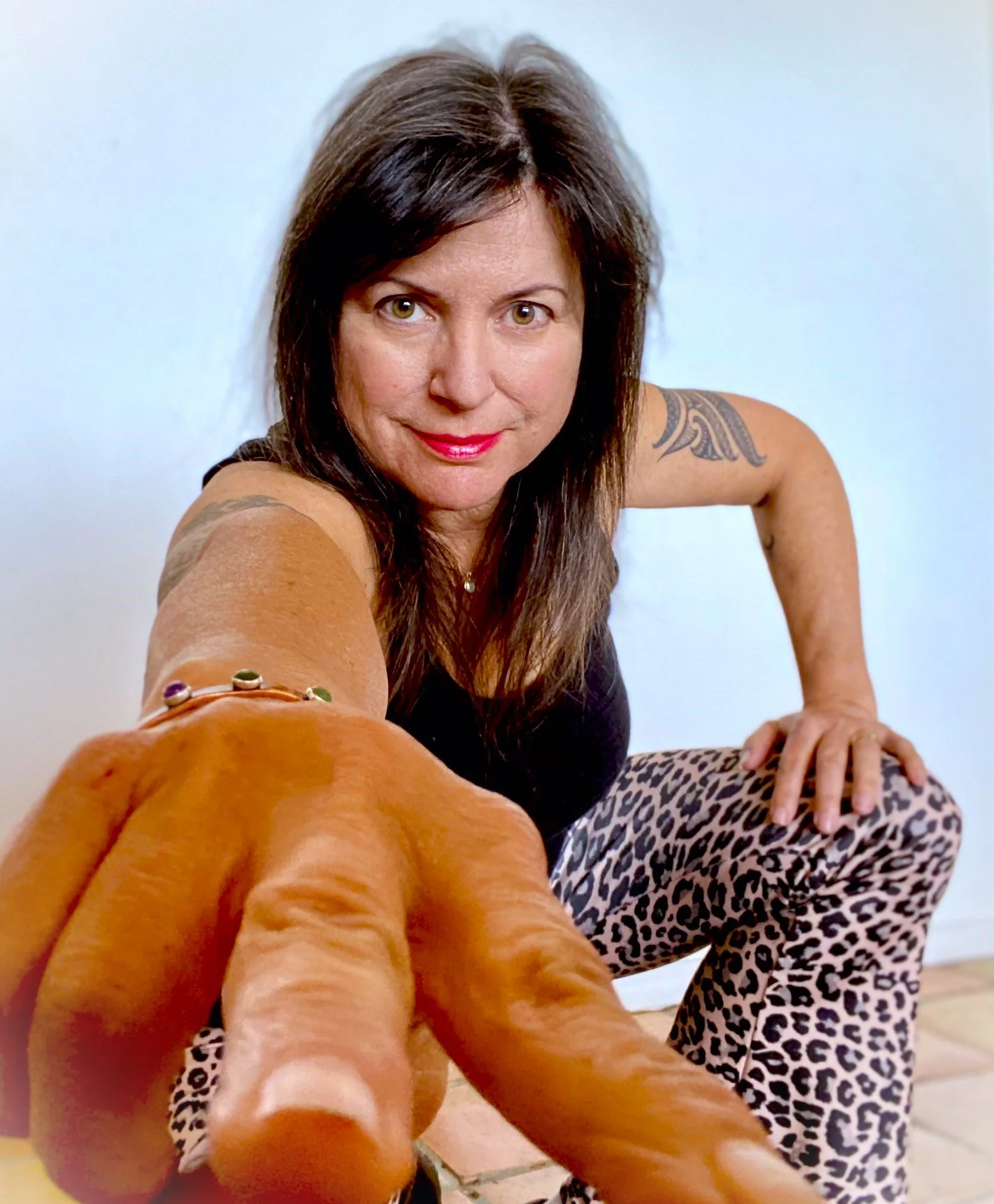
“I love spreadsheets and accounting, but also love creating and making and engineering and figuring out how things work…” We knew we had to talk with Joanne Marracci, jewelry maker and owner of Marracci Designs, to talk about all the creative business owner things. She shared her love of Excel with us and how she used it for tracking inventory, along with some great lessons learned for selling in galleries and why following new jewelry makers inspires her.
What is your favorite business tool and why?
I love Excel! There are so many things you can do with it, and ways to track things. It’s dynamic so as things change, you can make those things change in Excel. You can set it up to do inventory too.
At one point, I had five different galleries that I was selling in and had hundreds of pieces out there. In order to keep track of what I had, I would color code everything. Each gallery had a different color and I could tell at a glance what stock I should have in each gallery. It helped me go and check the inventory and make sure I was getting paid for the things that aren’t there any more, but should be. Or, I’ve had the occasion where some things either get lost or have gotten stolen, but the galleries have always been really great about paying me because I could say, “This is what I’ve had according to my sheet, let’s check yours and then get them to match.” It’s a great tool to keep tabs on my stuff when it’s out in the world and I can’t keep control of it myself.
When you’re working with galleries, what does that process look like and what lessons have you learned in having your stuff for sale at different places?
The commission structure is hard because I can’t charge more for work in a gallery than what I am selling directly at the farmer’s market, then I’m just competing with myself. So, I’ve always had the same pricing structure whether it’s in a gallery, a shop, or on my table. It doesn’t matter what the commission structure is, I’m going to sell it at $200 and I’m either going to make 60% of that or I’m going to make 100% of that. I had to really struggle to accept that for a while.
But, if I didn’t have that sales avenue, I wouldn’t have made as many new customers as I have now. Word gets around and they keep seeing your name out there in the same places. “Oh Marracci, oh I’ve heard of you!” That’s what I get when I meet someone for the first time. It’s because I was in these small galleries in town.
And, as far as lessons learned, make sure there’s a contract. Make sure you understand who has liability. Whether or not they’re going to pay you if something walks out the door accidentally. Or if it gets broken. Who’s liable for that? It’s good to know ahead of time. And, of course, the commission structure is always really important. When you get paid is a good thing to know. And, how long you can have a piece in the shop. Some galleries don’t like to have pieces for a really long time. Also, do you want to be in charge of your own display?
How do you decide your pricing?
I have a formula! I take my materials cost and double that. Then I add my hourly rate, which for me is $25 an hour. And, then I double that. And that’s how I end up with a retail price—double my cost, plus my labor, double that. Then, I kind of tweak it if I think it’s needed. If something took me a lot less time than I expected it to, but it has a perceived value of more, I’ll add a little bit more. Or vice versa. If it took me way longer than it should have, I still calculate it that way and see what I probably should be selling it at. I need to make 100% sure I’m making, at the very least, double my cost of goods. That’s my goal.
This ends up being pretty in line with my jeweler friends. But, everybody’s got a different cost of goods and a different overhead. I work in my home out of my studio, and I’ve paid for all my tools years ago, so I don’t have a huge overhead and don’t really include an overhead percentage like a lot of products should have. It’s just not something I have to add.
And, I’ve been making a profit every year. It might not be, you know, enough to buy a Lamborghini, but I end up in the positive every year, so I know I’m doing something right.
When have you dealt with self-doubt or had something not work and needed to shift to a different strategy?
I would say, it was learning to make things I want to make, that I’m passionate about making and not trying to make things I think people will buy. I had to switch what I was doing because I was really trying to do line jewelry, and was reading magazine articles about how to run a jewelry business. That was more for retail, or retail designers that would have a line of jewelry and would send it off to a store for that season, and then the next season they’d have another line. I tried doing that, and just found I didn’t like it. I would say it was just trial and error.
Self-doubt has come up in other places. It sounds so stupid, but this is just me…I want people to like me. And so, if I make something that they don’t like, it hurts my feelings. If they like me, they’ll like my jewelry, or vice versa. I feel like such a 12-year-old saying that. But, we put our hearts out there in our work and it feels like “here’s this thing, do you like me?” That’s one thing I struggle with, can I just make this and not worry what people think?
Are there places you go to have new ideas or inspiration for your jewelry?
Instagram is really great for seeing what other people are doing. I follow a lot of other jewelers, and Facebook groups like Aspiring Metalsmiths are really fun. Even though it's a lot of beginners, they have the funnest eye. I think because there’s no preconceived notion of what they’re supposed to do, or how things are supposed to look. There is a bit of innocence in a beginner that I love to see what they’re doing because they are, like, way out of the box sometimes and you just wonder where it came from. It’s cool.
What’s a lesson you’ve learned that’s stuck with you?
My late father always told me, “Do what you say you are going to do.” I use that ethic in my work and my life and it has never let down. Another lasting lesson I have learned is to make what I love to make and that positive energy will be apparent in the work. People will feel it, connect with it, and respond.