From Page to Screen: Dylan Quarles Crafts Stories in Port Townsend
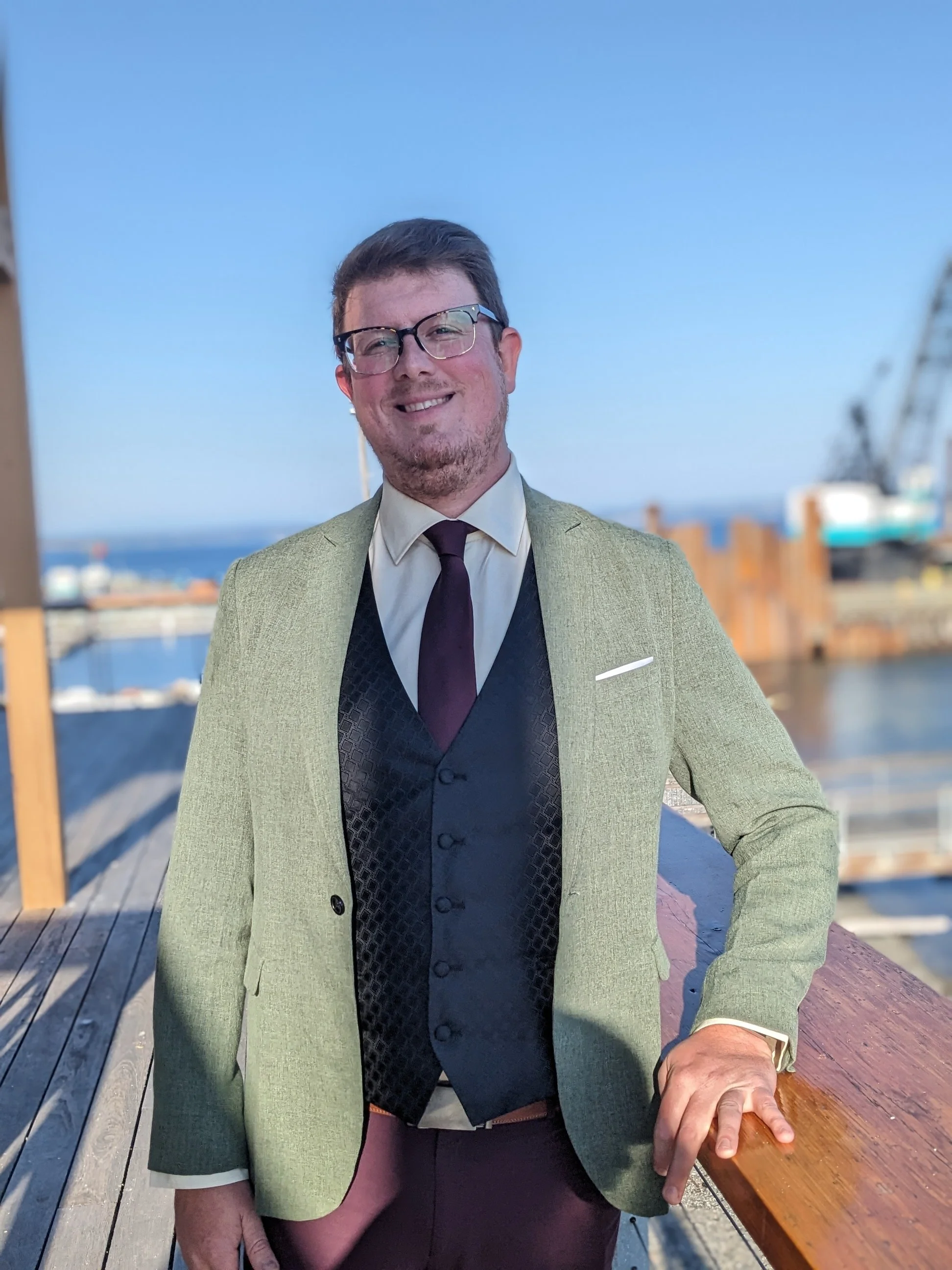
From film school, to accomplished novelist, to short story author, to screenwriter, Dylan Quarles has come full circle in his career. He sat down with Wheelhouse to talk about the lessons he's learned along the way, how to capitalize on luck, and what his writing process looks like. Read to the end for a new take on writer’s block — you’re not the problem!
Your career has grown so much — from self publishing to now screenwriting. What are the lessons you’ve learned that you’ve taken with you throughout your career?
Well, it’s funny, I’m still a free agent. I don’t have an agent, I don’t have representation. I’ve sold over 100,000 books, I’ve had four of my short stories optioned for film. I screen write more than I write novels or short stories anymore because the optioning of the film opened a whole new doorway for me with a group of producers that are really investing in me.
But, I think the lesson that carries through from the beginning of my journey as a writer to now is that, there exists a third rail, outside of the traditional pathways you might take. I have ownership over what I’ve made, because I’ve made it myself. So, when I have those moments of doubt, or imposter syndrome, when I’m wondering if I’m really cut out for this, I can reflect on the fact that I’ve been able to get where I am in large part due to my own hard work and my own ingenuity and creativity. And, not just creativity on the page, but creativity in my marketing, my branding, how I represent myself, and how I advocate for myself. That part of the advocacy process is what ended up landing me in this current role I have writing screenplays. It was through conversations around the optioning of my work, and since I was representing myself as my own agent, the film studio folks were like “oh, this guy’s not just sort of like one of these head-in-the-clouds writers, he’s also really business-oriented and knows what he wants out of this relationship.” I think that helped them see me in a different light and that opened the door for them to ask if I was interested in working with them more. Am I interested in working with them on projects that aren’t directly related to the work they’ve optioned with me? And, that all comes back to that whole idea of just being forced to believe in yourself, forced to work really hard for yourself, which started way back in the early days of self-publishing.
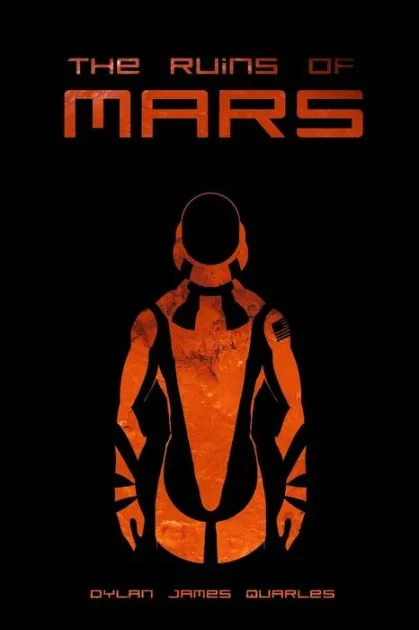
The Ruins of Mars
That piece around marketing, networking and meeting the right people to have those conversations so they see your full value is pivotal. How did you do that?
There’s a component of luck, you know? There’s that saying, “luck is what happens when preparation meets opportunity,” so you have to have your ducks in a row and when you see the iron is hot, you strike. In retrospect, I see that there was a clear building of momentum for me. I had written a novel called There Be Monsters and I was actually able to attract a small publisher for that novel. I had leveraged some connections I had with that individual. They were looking to get into publishing fiction and I was sitting on this novel, so it was a win-win for both of us. And, it taught me a lesson about the difference it can make having that little logo on the first page of the book, “published by so and so.” It almost doesn’t even matter who, but it matters to people who give awards and to people who determine what is award worthy. The publisher submitted There Be Monsters to a couple different regional awards and a national one, and it ended up winning the Best Indie Book Award for Action Adventure. That was huge for me because suddenly I have a sticker I can put on the cover of the book.
When the publisher said “okay, what’s next?” I said I have this idea for a series of short stories. They’re all gonna be set in my hometown and it’s got this great, paranormal reputation. A lot of folks who know Port Townsend know it as a sort of spooky, haunted, Victorian seaport, which it is. So we started writing and publishing those books in collaboration until a certain point when he was taking his business in a different direction. So, I decided to start my own publishing company and brought all my work under that umbrella.
Suddenly, those short stories attracted the interest of a group of Hollywood producers. There’s a different vibe that comes with something under a branded umbrella. They left a card at a bookstore where they bought the books in town. One of them was vacationing here. That’s the luck component. The bookstore owner said I needed to call these people because he thought they were serious. I did, and they were, and we launched into contract negotiations and that whole process. And, here we are.
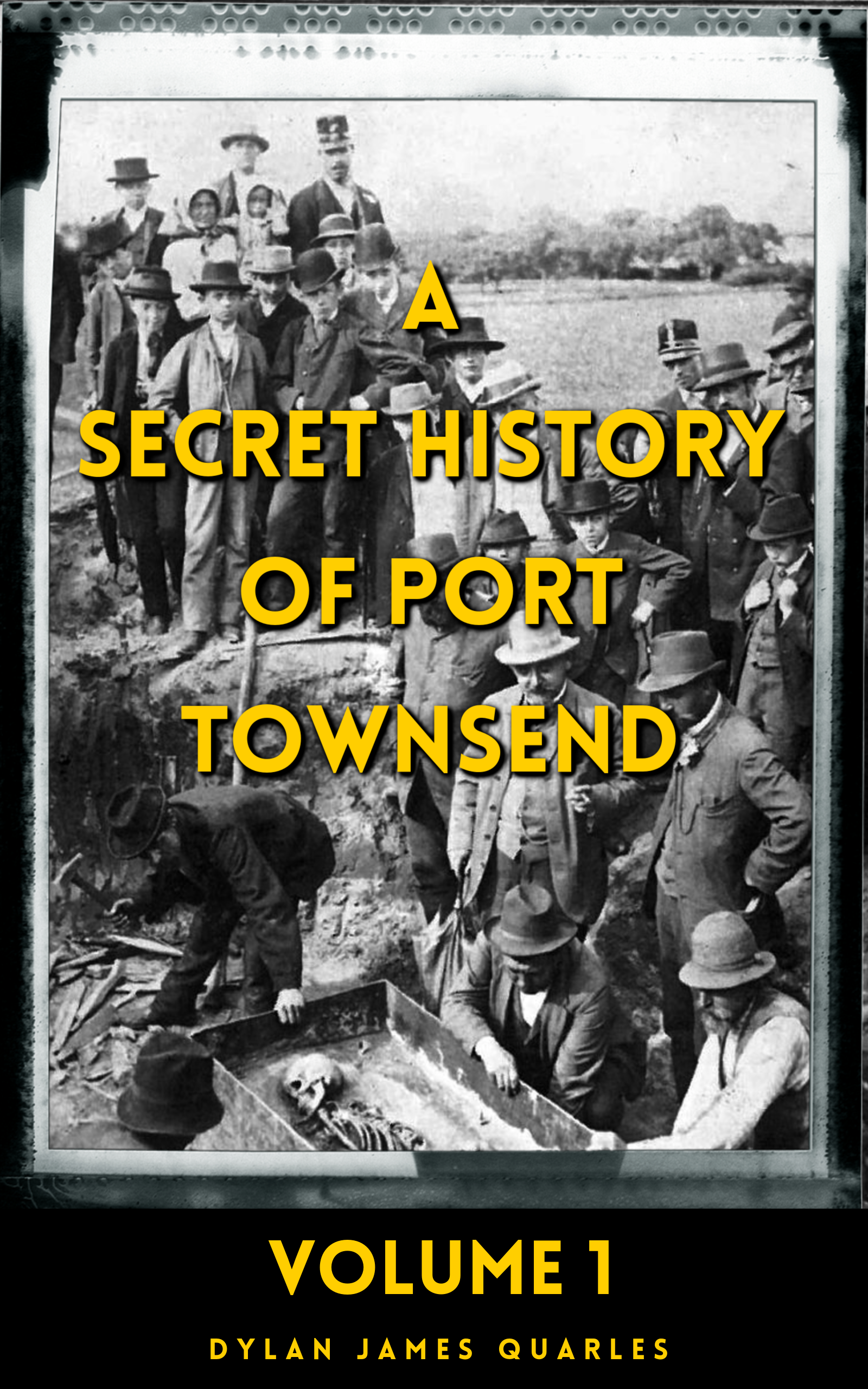
A Secret History of Port Townsend: Volume 1
There’s so many different approaches to a writing process — writing 1,000 words a day or I sit down to write for these hours no matter what. I’m curious, what does yours look like?
It’s changed a lot, and it’s evolving. I used to be one of those thousand words a day kind of people. When I was writing novels, you kind of have to be, because it’s such a beast to write a novel. But I can’t now. I have a three year old son, and it’s part of the reason why I transitioned into short stories… you cannot write 7,000 words a week with a three-year-old. It’s just not possible. Well, some people probably figured it out. But, I had to change the way I approached writing. It grew out of a philosophy I already had as a writer. It is a logistical philosophy wherein each scene — because, I didn’t realize it, but I was writing scenes… I had chapters, and within them sub-chapters, which are scenes — needed to serve at least two purposes. One of those purposes would always need to be character. And one of them would need to be plot, or setting, or atmosphere. So, instead of writing a thousand words a day, what I need to do is make sure everything I write serves a certain number of purposes to the story. It’s forced me to be more thoughtful about the direction the story is heading.
What about the days where nothing’s there?
I don’t beat myself up about it the way I used to. And, honestly, the periods of time where nothing happens, you know, nothing’s happening because something is wrong. Not with me, but with my story. This is my experience, at least. For me, writer’s block springs from some part of my creative mind understanding that I’ve made a critical mistake at some point in the not-too-distant past. So, a lot of times when nothing’s happening, I go on a little walk with the dog and I think, “okay, the last two turning points in the plot…” Because it’s always plot-related for me. I have to go back through the last couple of big turning points in the plot and see if this is where I’ve swerved off the road and I’m no longer headed toward those mile markers I’m trying to go toward, because I can’t see how to get there anymore, because I’ve taken a wrong turn.